
In today’s fast-moving digital landscape, how you build a product is just as important as what you build. Delivery and engagement models define the structure, communication flow, and execution strategy behind every digital project whether it’s a website, ERP system, or custom software. Choosing the right model is not just a process decision; it directly impacts timelines, cost efficiency, team collaboration, and overall success.
Many businesses underestimate the importance of selecting the right delivery approach. A mismatched model can lead to missed deadlines, unclear expectations, budget overruns, and constant rework. When the engagement structure doesn’t align with the project’s complexity or business goals, even technically strong teams struggle to deliver consistent results.
That’s why modern digital projects require a balance of flexibility and structure. The right delivery and engagement model ensures adaptability to changing needs while maintaining clear processes and accountability. It creates a strong foundation for scalable growth, efficient execution, and long-term sustainability making it a critical decision for any business investing in digital solutions.
What Are Delivery & Engagement Models?
Delivery models refer to the structured framework used to execute a project, including how teams are organized, how tasks are managed, and how the overall development process flows from start to finish. They define the methodology, timelines, resource allocation, and communication patterns that guide the entire lifecycle of a digital project. Whether it’s a fixed-scope implementation or an iterative development cycle, the delivery model determines how efficiently and predictably the work gets done.
Engagement models, on the other hand, define how the client and the service provider collaborate throughout the project. This includes the level of involvement, communication frequency, decision-making responsibilities, and contractual structure. It outlines whether the relationship is project-based, time-based, or ongoing, and plays a key role in aligning expectations between both parties.
Together, delivery and engagement models create a foundation for scalability, cost control, and transparency. A well-defined approach ensures that businesses can adapt to changing requirements without losing control over budgets or timelines, while also maintaining clear visibility into progress, performance, and outcomes.
Our Core Delivery Models
Fixed Scope Model
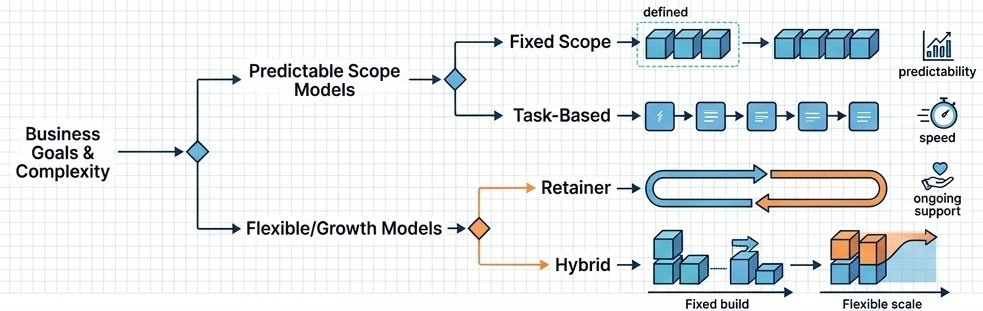
The Fixed Scope Model is ideal for projects with clearly defined requirements, timelines, and deliverables. It works best when the objectives are stable and there is minimal expectation of change during the development process. This model allows businesses to plan with confidence, as everything from cost to milestones is agreed upon upfront.
One of the key benefits of this approach is predictability. It ensures better budget control and reduces uncertainty, making it a preferred choice for straightforward projects like website development, MVP builds, or system implementations with well-documented requirements.
Retainer Model
The Retainer Model is designed for businesses that need continuous support, improvements, and optimization over time. Instead of working on a one-time project, this model provides ongoing access to a dedicated team that understands your systems and evolves them consistently.
This approach is highly effective for long-term growth, as it enables regular updates, faster issue resolution, and proactive improvements. It also builds a stronger collaboration between the client and the team, ensuring stability and continuous progress without the need to restart engagement every time.
Hybrid Model
The Hybrid Model combines the strengths of both fixed and flexible approaches, making it suitable for projects that start with a defined scope but require adaptability as they grow. Typically, the initial phase is executed with a fixed structure, followed by a more flexible engagement for scaling and enhancements.
This model is particularly useful for businesses aiming to launch quickly and then evolve based on real-world feedback. It balances control with agility, allowing organizations to maintain direction while still adapting to new opportunities and changing requirements.
Task-Based Model
The Task-Based Model focuses on executing small, clearly defined tasks within a short timeframe. It is best suited for businesses that need quick fixes, minor updates, or specific deliverables without committing to a long-term engagement.
This approach offers speed and flexibility, allowing teams to address immediate needs efficiently. It is especially valuable for handling ad-hoc requirements, ensuring that even small but important tasks are completed without delays or unnecessary complexity.
Comparison Table
| Model | Best For | Flexibility | Cost Control | Speed |
| Fixed Scope | Defined projects | Low | High | Medium |
| Retainer | Ongoing work | Medium | Medium | High |
| Hybrid | Growth + build | High | Medium | High |
| Task-Based | Small tasks | High | High | Very High |
Why Choosing the Right Model Matters
Selecting the right delivery and engagement model has a direct impact on how quickly a project moves from idea to execution. When the structure aligns with the project’s needs, teams can work more efficiently, make faster decisions, and avoid unnecessary delays. On the other hand, a poorly chosen model often leads to confusion, slow progress, and constant back-and-forth, ultimately affecting the overall delivery speed.
It also plays a crucial role in budget predictability. The right model helps businesses allocate resources wisely, manage costs effectively, and avoid unexpected expenses. When there is clarity in scope, engagement terms, and execution strategy, financial planning becomes much more reliable and controlled.
Beyond speed and cost, the right model significantly improves accountability and efficiency. Clearly defined roles, responsibilities, and communication channels ensure that everyone involved understands their part in the process. This leads to better coordination, reduced errors, and a more streamlined workflow, resulting in higher-quality outcomes and a smoother project experience.
Key Benefits of Structured Delivery
- Clear timelines and expectations
- Better cost control and transparency
- Faster turnaround and execution
- Scalable engagement as business grows
- Reduced project risk
How Our Delivery Process Works
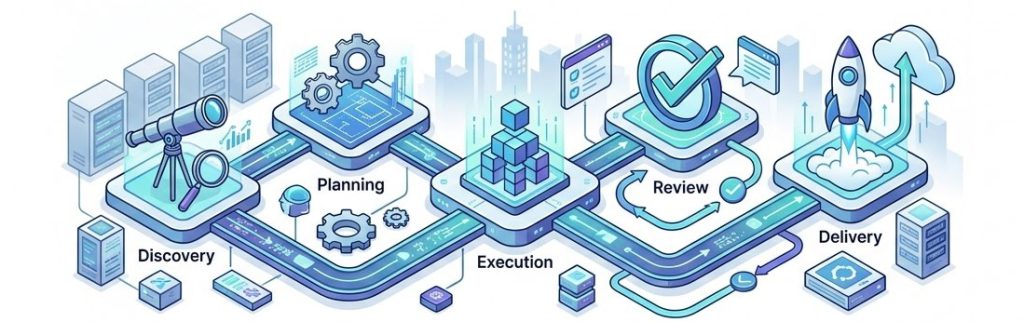
Every successful project begins with a clear understanding of goals, challenges, and expectations. The process starts with a discovery phase where requirements are explored in depth, followed by structured planning that aligns resources, timelines, and deliverables. This foundation ensures that every decision moving forward is intentional and aligned with business objectives.
Once the direction is defined, the focus shifts to execution, where the actual development and implementation take place with continuous coordination and progress tracking. Regular reviews are integrated throughout the process to ensure quality, adaptability, and alignment with evolving needs. This ongoing feedback loop helps refine the output before moving into the final delivery phase, where the solution is deployed and made ready for real-world use.
Real Impact / Example Use Case
Consider a growing eCommerce business built on Shopify that needed both a fast launch and continuous optimization. By adopting a hybrid delivery and engagement model, the initial store setup was completed within a fixed timeline, ensuring a quick market entry. Once live, the engagement shifted toward ongoing improvements, including performance optimization, marketing integrations, and feature enhancements.
This approach resulted in faster execution, better resource utilization, and consistent growth over time. The business was able to scale efficiently without disruptions, demonstrating how the right delivery model can directly influence speed, operational efficiency, and long-term success.
Conclusion
Choosing the right delivery and engagement model is not just a strategic decision it’s a critical factor that defines the success of any digital project. The right approach ensures smoother execution, better cost management, and the flexibility to adapt as your business evolves. When structure and strategy align, outcomes become more predictable and impactful.
If you’re planning your next digital initiative or looking to improve an existing system, selecting the right model can make all the difference. Get in touch with our team to explore the best approach tailored to your needs and take the first step toward building, scaling, and sustaining your digital success.
