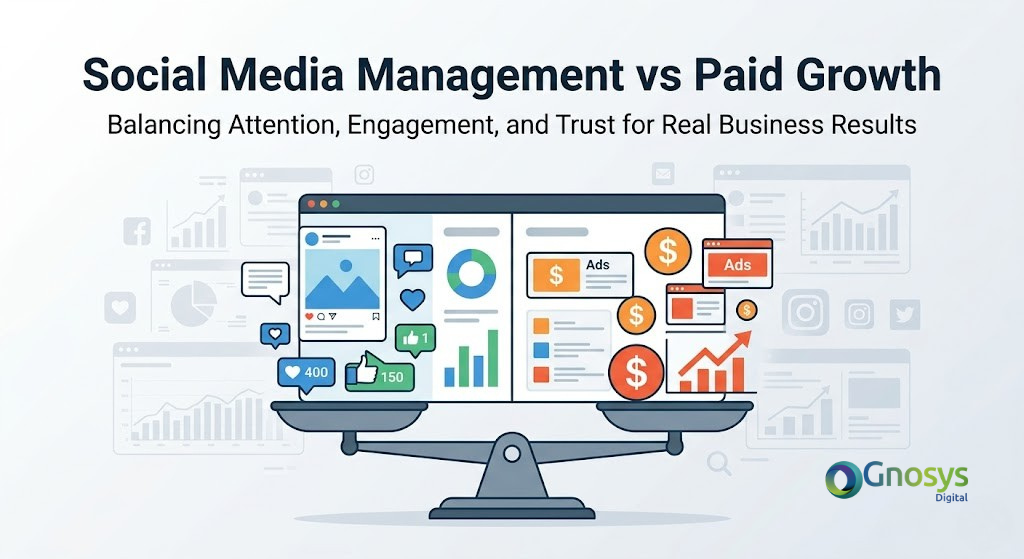
Many businesses today are struggling to grow their online presence despite consistently investing time, effort, and money into digital platforms. The challenge is not just about being active on social media but about understanding why growth is not happening in the expected direction, even when content is being posted regularly and campaigns are being run. This gap between effort and actual results creates frustration for brands trying to scale in a competitive digital environment.
A major point of confusion comes from choosing between organic social media management and paid growth strategies, especially when both promise visibility but deliver very different outcomes. Organic management focuses on building long-term brand trust, engagement, and community, while paid growth often delivers quick numbers like followers, likes, and views that may not always translate into real business value. Many businesses end up stuck between these two approaches without a clear understanding of which direction actually supports sustainable growth.
The real problem becomes even more visible when time is invested heavily but the results remain inconsistent, making it difficult for businesses to measure success or justify their marketing efforts. This leads to an ongoing cycle of experimentation without clarity, where strategies are changed frequently but outcomes still fail to stabilize. So what actually works and what should you choose?
What is Social Media Management?
Social media management is the process of handling a brand’s entire presence across social platforms in a structured and consistent way. It is not limited to just posting content, but includes planning what type of content should be created, how it should be positioned, and how it connects with the target audience. This involves creating posts, reels, stories, quotes, and other content formats that align with the brand’s identity and communication style.
A key part of social media management is maintaining daily posting and consistency so that the audience continuously sees and remembers the brand. Along with posting, it also includes actively managing engagement such as replying to comments, responding to direct messages, and interacting with the audience to build a stronger relationship. This continuous activity helps in keeping the brand alive and relevant in a fast-moving digital environment.
Social media management also includes handling multiple platforms like Instagram, Facebook, LinkedIn, and others in a coordinated way so that the brand message remains consistent everywhere. Over time, this approach focuses on long-term brand building by creating trust, credibility, and familiarity with the audience instead of chasing quick but short-lived visibility.
What is Paid Growth?
Paid growth refers to the use of paid strategies to quickly increase a brand’s visibility and engagement on social media platforms. This often includes boosting posts, running paid advertisements, or using promotional campaigns designed to push content to a larger audience in a very short period of time. The main idea behind paid growth is to accelerate reach beyond organic limitations.
In many cases, paid growth also includes increasing visible metrics such as followers, likes, and views through advertising or targeted promotions. These methods are used to create instant attention and make a brand appear more popular or active, which can help attract new users initially. It is often used when businesses want immediate traction rather than waiting for organic growth to build slowly over time.
Paid growth strategies are commonly used for viral push campaigns where the goal is to maximize exposure quickly and generate buzz around specific content or offers. While this approach can significantly improve visibility in a short span, it is mainly focused on short-term impact and social proof rather than building deep audience relationships or long-term trust.
Key Differences
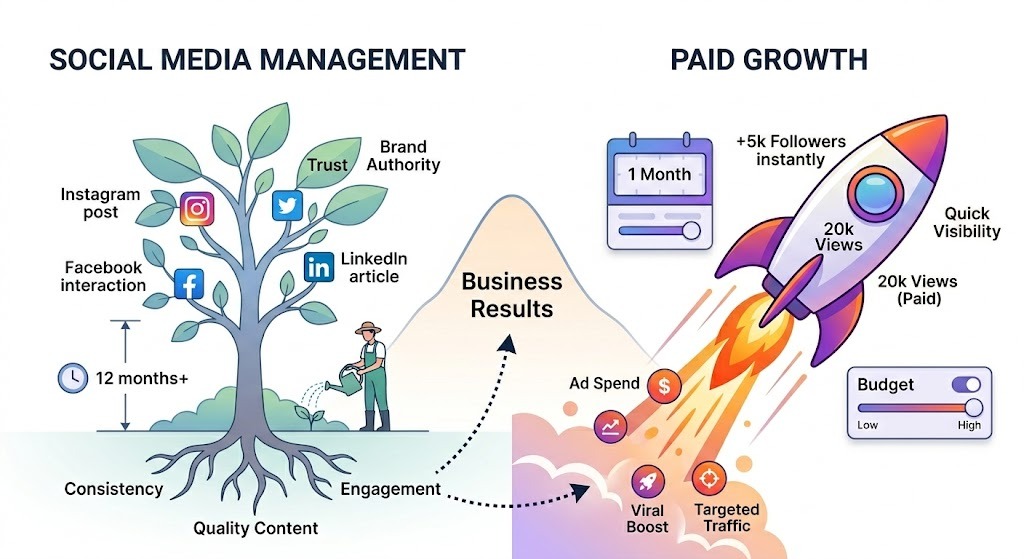
- Organic growth focuses on long-term brand building and steady audience development, while paid growth delivers instant results and quick visibility.
- Social media management requires consistent effort over time, whereas paid growth strategies are designed for fast execution and immediate reach expansion.
- Organic strategies help build a strong brand identity over time, while paid methods mainly provide short-term boosts in attention and visibility.
- Organic engagement is usually higher in quality because it comes from genuinely interested audiences, while paid growth often prioritizes quantity of reach and interactions.
- Organic marketing builds trust and credibility gradually through consistent value, while paid growth creates social proof by making the brand appear more popular quickly.
When Should You Choose Social Media Management?
Social media management is the right choice when a business is focused on building a strong and recognizable brand over time. It works best for companies that want to establish a consistent identity across platforms and ensure that their audience clearly understands what the brand stands for. Instead of chasing quick results, this approach focuses on creating a stable foundation for long-term digital presence.
It is also ideal for businesses that are aiming for long-term growth where consistency, content quality, and audience trust matter more than instant visibility. By regularly posting valuable content and maintaining engagement, brands can gradually build a loyal community that stays connected and engaged over time. This makes social media management a powerful strategy for sustainable growth rather than temporary spikes in attention.
This approach is especially important for businesses that want to improve credibility and build meaningful audience connections. When users repeatedly see consistent content and genuine interaction, it naturally strengthens trust and positions the brand as reliable and professional in its industry.
When Should You Choose Paid Growth?
Paid growth is most effective when a business is just starting out and needs an initial push to gain visibility in a crowded digital space. New accounts often struggle with reach, and paid strategies help overcome this limitation by putting content directly in front of a larger and more targeted audience. This allows brands to quickly establish a basic level of awareness in the market.
It is also highly useful during product or service launch campaigns where immediate attention is required. Paid promotions help increase visibility quickly and ensure that the launch message reaches the right audience at the right time. This is especially important when timing plays a key role in generating interest and early traction.
Another strong use case for paid growth is creating a powerful first impression for potential customers. By boosting content and increasing exposure, businesses can appear more established and active, which helps in attracting initial engagement and building curiosity around the brand. This quick visibility can later be supported by organic strategies for long-term growth.
The Smart Strategy: Combine Both
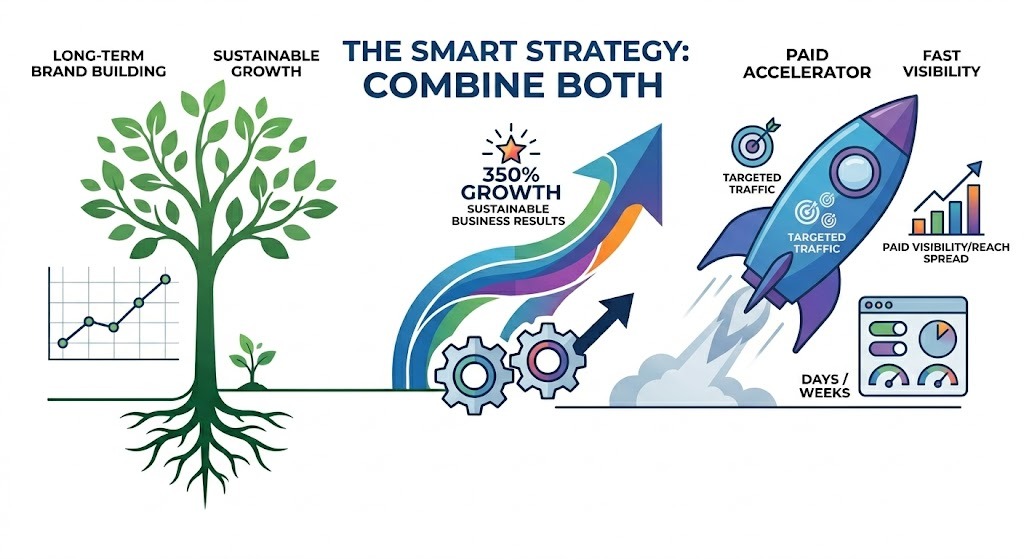
The most effective approach for sustainable digital success is not choosing between social media management and paid growth, but combining both in a strategic way. Each method serves a different purpose, and when used together, they complement each other to create a stronger overall marketing system. This balance allows businesses to move beyond short-term wins and build a more stable growth engine.
Paid growth plays the role of driving attention by quickly increasing visibility, bringing new users to the brand, and generating immediate awareness. It helps put content in front of a larger audience and creates the initial traffic needed for any campaign to gain momentum. Without this attention layer, even strong content can struggle to reach the right people at the right time.
On the other hand, social media management focuses on retention, engagement, and trust-building by consistently nurturing the audience that comes in through paid campaigns. It ensures that once users discover the brand, they stay connected through valuable content, regular interaction, and a strong brand identity. When attention from paid growth is combined with the trust built through management, it creates real, long-term business growth that is both scalable and sustainable.
Services That Support Both Growth Models
Social media growth works best when different service types are aligned with clear objectives and outcomes. Each service plays a specific role in strengthening either long-term brand building or short-term visibility, depending on the strategy being used. When combined properly, these services create a structured system that supports both awareness and trust at the same time.
Below is a clear breakdown of how different services contribute to overall growth and what outcomes they typically deliver for businesses aiming to scale their digital presence effectively.
| Service Type | Purpose | Outcome |
| Social Media Management | Content + consistency | Long-term growth |
| Followers Growth | Social proof | Credibility boost |
| Likes & Views | Engagement boost | Higher reach |
| Viral Campaigns | Exposure | Fast visibility |
| Multi-platform Management | Brand presence | Wider audience |
How to Choose the Right Approach for Your Business
Choosing the right approach for your business depends heavily on your budget and how much you are willing to invest in growth. If your budget is limited, focusing on social media management first helps you build a strong foundation through consistent content and audience engagement. However, if you have more resources available, adding paid growth can accelerate visibility and help you reach a larger audience much faster.
Your decision should also be based on your primary goal—whether you want long-term brand building or quick results. If your focus is brand credibility, trust, and audience connection, organic management is more suitable. On the other hand, if your goal is immediate attention, leads, or product awareness, paid strategies will give you faster impact.
Timeline and competition also play a major role in this decision-making process. In highly competitive markets, relying only on organic growth may take longer to show results, so combining it with paid efforts can be more effective. However, if you have time to build gradually and consistently, organic strategies will create stronger and more sustainable positioning over time.
Conclusion
In the end, both social media management and paid growth have their own value, and neither approach can be considered ineffective on its own. Each strategy solves a different problem one focuses on building trust and consistency over time, while the other focuses on delivering fast visibility and immediate attention. Understanding this difference is what helps businesses avoid wasted effort and unclear results.
The right choice always depends on your specific goals, budget, timeline, and market competition. If your focus is long-term brand building and audience loyalty, organic management is essential. If you need quick traction or campaign-driven results, paid growth becomes the key driver. However, the most powerful outcomes are achieved when both strategies are aligned instead of used in isolation.
Most successful brands don’t choose one over the other they combine both strategically to create a balanced growth system that drives attention, engagement, and trust together. If you’re ready to scale your business with a structured approach that blends both organic and paid strategies, explore professional social media solutions and start building consistent digital growth today.
Schedule a Consultation:
https://gnosysdigital.com/product-category/digital-services/social-media-management/
