
CUSTOM SUPPLY CHAIN & LOGISTICS SOFTWARE
Your Supply Chain Is Unique. Your Software Should Be Too.
Every business moves orders, materials, and products differently. We design and develop custom supply chain and logistics software around your workflows, partners, and operating requirements—connecting the processes that generic tools and disconnected systems often leave apart.
✳Start with the operating model.
Design the right level of technology around it.
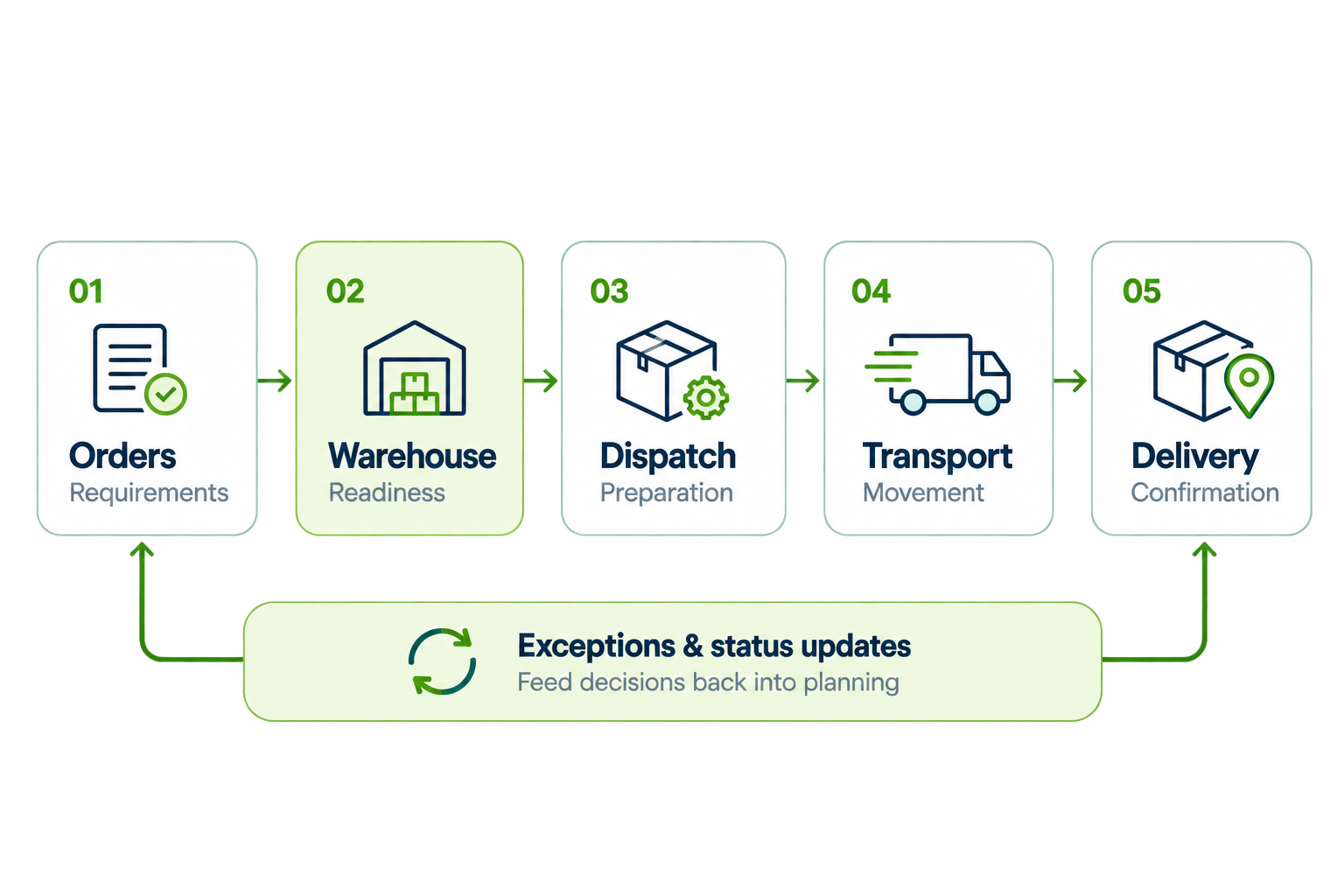
Coordination and visibility across the journey
THE CHALLENGE
When Every Part of the Supply Chain Runs Separately
As operations grow, coordinating orders, stock, transporters, distributors, and deliveries becomes harder. When each team relies on separate spreadsheets, messages, and systems, managers spend time reconciling information instead of acting on it.
Disconnected Operations
Sales, stores, dispatch, accounts, and transport teams maintain separate records, making it difficult to maintain a consistent view of an order.
Limited Shipment Visibility
Once a shipment leaves the warehouse, updates may depend on phone calls, messages, or manual follow-ups.
Manual Dispatch Coordination
Vehicle allocation, transporter assignments, dispatch documents, and delivery schedules can become difficult to coordinate as volumes grow.
Partner Communication Gaps
Dealers, distributors, transporters, and customers may operate outside internal systems, creating delays and duplicated work.
Exceptions Without Clear Ownership
Delayed deliveries, shortages, damaged goods, and disputed deliveries need a clear process for recording, assigning, and resolving issues.
Your supply chain needs more than isolated tools. It needs workflows that connect people, transactions, and decisions.
CUSTOM SOLUTIONS
One Connected View of Your Supply Chain
Depending on your requirements, the solution may be a focused operational application, a partner portal, a workflow automation layer, or a broader platform connecting multiple business functions.
Order and Dispatch Management
Coordinate order readiness, dispatch planning, shipment documentation, vehicle assignment, and dispatch status.
Transporter and Shipment Coordination
Record transporter assignments, shipment milestones, expected delivery dates, and relevant transport details.
Dealer and Distributor Portals
Give approved business partners a structured way to submit orders, review relevant status information, and manage agreed workflows.
Delivery Confirmation and Exceptions
Capture proof of delivery where required, record delivery discrepancies, and route exceptions for follow-up.
Warehouse and Inventory Connectivity
Connect warehouse availability, goods movement, and dispatch readiness with the relevant supply chain workflows.
Returns, Claims, and Disputes
Structure return requests, shortage or damage records, supporting evidence, approvals, and resolution status where required.
Business-System Integration
Connect relevant existing systems so information can move between business functions with less manual re-entry, subject to available interfaces and feasibility.
Operational Dashboards and Alerts
Surface relevant shipment status, pending actions, delays, exceptions, and operational indicators based on the data available.
These are potential capabilities, not a fixed ready-made product package. Final scope is defined around your requirements.
END-TO-END WORKFLOWS
Connect the Journey From Order to Delivery
A supply chain solution should reflect the actual journey of an order through your business. We map that journey first, then determine where information, approvals, integrations, and exception handling should sit.
Order
Capture the order and its relevant requirements.
Plan
Check availability and coordinate fulfilment requirements.
Prepare
Connect warehouse readiness, picking, and dispatch preparation.
Dispatch
Record shipment details, transporter assignment, and dispatch status.
Deliver
Capture delivery status and confirmation where required.
Resolve and Learn
Record exceptions, manage follow-ups, and review operational information.
The final stage can feed planning and future decisions. This is an illustrative workflow, not a claim that every customer’s process follows these exact stages.
BUILT AROUND YOUR BUSINESS
Your Process Comes First. The Software Follows.
A manufacturer shipping directly to customers does not operate like a distributor supplying a dealer network. A business coordinating third-party transporters has different requirements from one managing its own fleet.
We start with how your business actually works, identify the gaps that matter, and design a solution around the processes you need to improve.
Fit Your Workflow
Define roles, handoffs, approvals, documents, and status transitions around the way your teams operate.
Connect the Right Systems
Identify where existing ERP, accounting, inventory, sales, and operational tools should exchange information. The approach depends on technical feasibility and the systems involved.
Build in Stages
Start with a clearly defined operational problem and expand into additional workflows when business priorities justify it.
The objective is not to add complexity. It is to make your existing operation easier to coordinate, monitor, and improve.
A PRACTICAL STARTING POINT
Start With the Operational Gap That Matters Most
Not every business needs a large supply chain platform from day one. The right scope depends on your current processes, existing systems, transaction volumes, and priorities.
Dispatch and Shipment Control
For businesses that need better coordination of:
- Dispatch preparation.
- Transporter assignment.
- Shipment status.
- Delivery confirmation.
Distribution and Partner Coordination
For businesses that need structured interactions with:
- Dealers and distributors.
- Customers and sales teams.
- Third-party logistics partners.
- Agreed partner workflows.
Connected Supply Chain Operations
For businesses that need selected workflows across:
- Orders, warehouses, and transport.
- Delivery, returns, and exceptions.
- Management reporting.
- Relevant system integrations.
These are illustrative starting points, not fixed packages. Final scope is defined around your requirements.
Discuss Your RequirementsOUR APPROACH
From Operational Understanding to a Working System
You should understand the proposed workflow and scope before committing to full development.
Discover and Map
Understand your current workflow, stakeholders, systems, documents, recurring problems, and desired outcomes.
Define and Design
Agree on the initial scope, map process flows, define user roles and exceptions, and plan the interface and reporting requirements.
Build and Integrate
Develop the agreed solution, implement required workflows, and connect relevant systems where technically feasible.
Validate, Deploy, and Improve
Test the workflows with users, support adoption, deploy in agreed stages, and identify improvements based on operational feedback.
CONNECTED BY DESIGN
Work With Your Existing Systems Where It Makes Sense
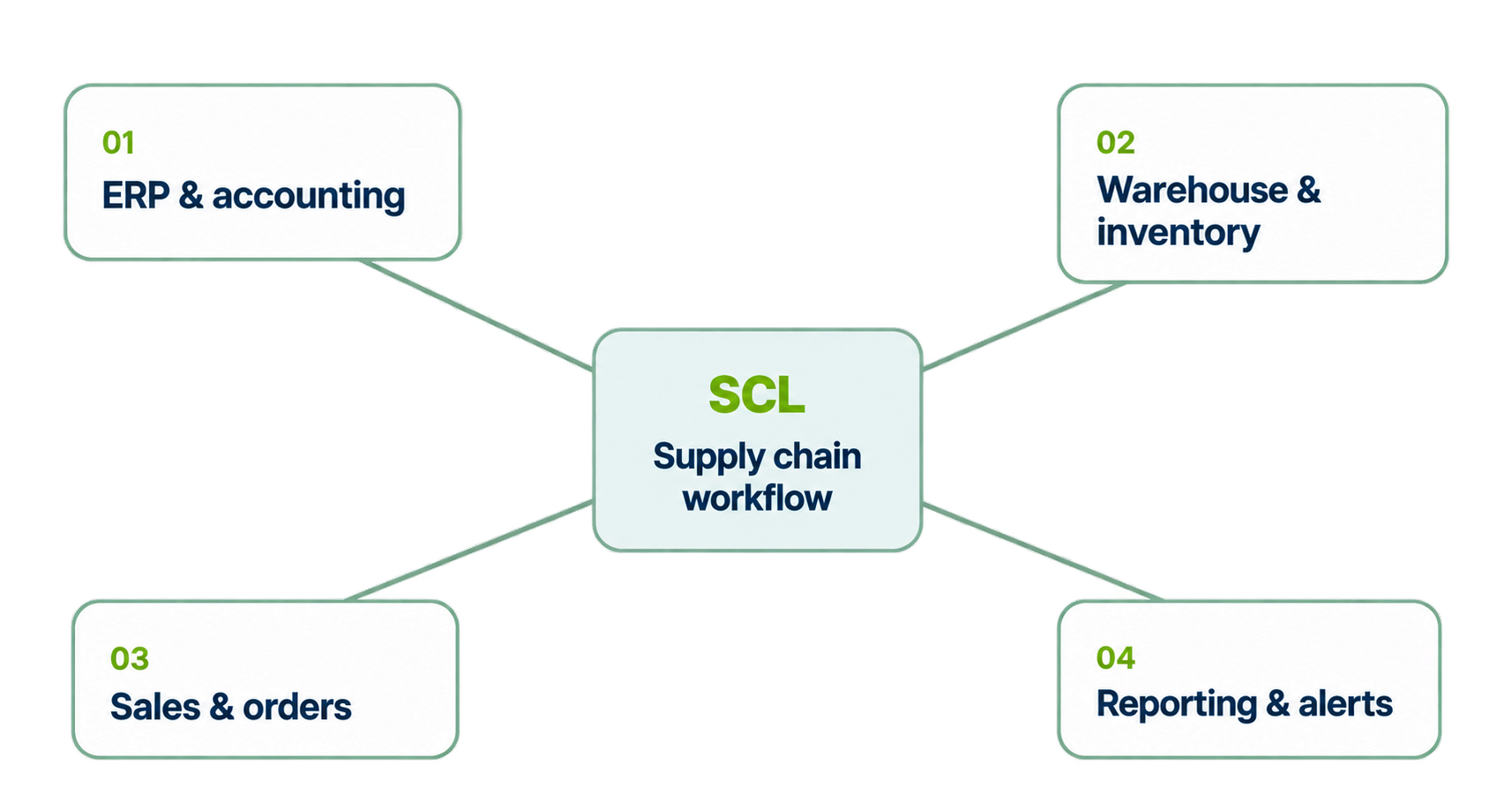
Supply chain software rarely operates in isolation. Depending on your business requirements, we can assess how the solution should exchange information with existing ERP and accounting platforms, warehouse systems, sales applications, reporting tools, and communication channels.
The actual integration method depends on available APIs, access permissions, data quality, licensing constraints, and the requirements of each system.
TECHNICAL APPROACH
Use the right architecture for the scope.
We use an appropriate architecture for the scope, maintainability, security, and expected operating requirements. Laravel may be used where suitable for the application, alongside appropriate databases, interfaces, and integration mechanisms.
Technology choices are confirmed against the requirements and technical feasibility of the project.
THE RIGHT DEVELOPMENT PARTNER
Custom Engineering for Real Business Operations
Gnosys Digital approaches supply chain software as a business-systems problem, not simply a feature-development exercise. The aim is to understand how your operation works and then build the right level of technology around it.
Business-First Design
Start with workflows, operational constraints, and business priorities.
Defined Scope and Delivery
Establish the required capabilities and delivery stages before development progresses.
Practical Integration
Consider existing systems and data flows instead of assuming the entire technology environment must be replaced.
Room to Evolve
Structure the solution so additional capabilities can be considered as requirements change.
QUESTIONS, ANSWERED
Supply Chain & Logistics Software: FAQs
Clear answers for manufacturers, distributors, logistics teams, and business owners exploring a more connected way to coordinate operations.
What is custom supply chain and logistics software?
It is software designed around a business’s particular processes for coordinating orders, inventory, dispatch, transport, distribution partners, deliveries, and related information. Its scope can range from a focused workflow application to a more connected platform.
How is this different from an ERP system?
An ERP connects multiple business functions within a broader business platform. Custom supply chain software may address a specific operational gap, connect systems that already exist, or provide workflows that a standard ERP does not adequately support. The right approach depends on the requirements; custom development is not automatically preferable in every situation.
Can the solution work with our existing ERP or accounting software?
Potentially, yes. Integration feasibility depends on the systems involved, their available interfaces, licensing, data structures, and access permissions. These factors should be assessed during discovery.
Can we include warehouse management, dispatch, and delivery workflows in one solution?
Yes, where that is appropriate to the business requirements. The workflows can be scoped as connected modules or implemented in stages.
Can transporters and distributors access the system?
A solution can include role-specific portals or interfaces for approved external partners when required. Access rules and permissions should be designed around the relevant business relationships.
Can delivery confirmation, returns, and claims be managed digitally?
These workflows can be included where needed, with appropriate status tracking, evidence capture, approvals, and responsibility assignment.
How much does custom supply chain software cost?
Cost depends on the workflows, number of user roles, integration complexity, reporting requirements, and deployment scope. We define the requirements and agree on a practical scope before preparing a proposal.
How long does development take?
Timelines depend on scope, integration dependencies, data readiness, and validation requirements. A focused initial release may be planned separately from a larger multi-module platform once the requirements are understood.
START WITH YOUR PROCESS
Let’s Build a Supply Chain System Around the Way You Operate.
Tell us how orders, warehouses, transporters, distributors, and deliveries work in your business today. We’ll discuss the operational gaps, the systems involved, and what a practical custom solution could look like.
Start with your processes, constraints, and priorities.
Discuss Your Supply Chain Requirements
The existing contact destination is the right place to share your requirements with Gnosys Digital.