
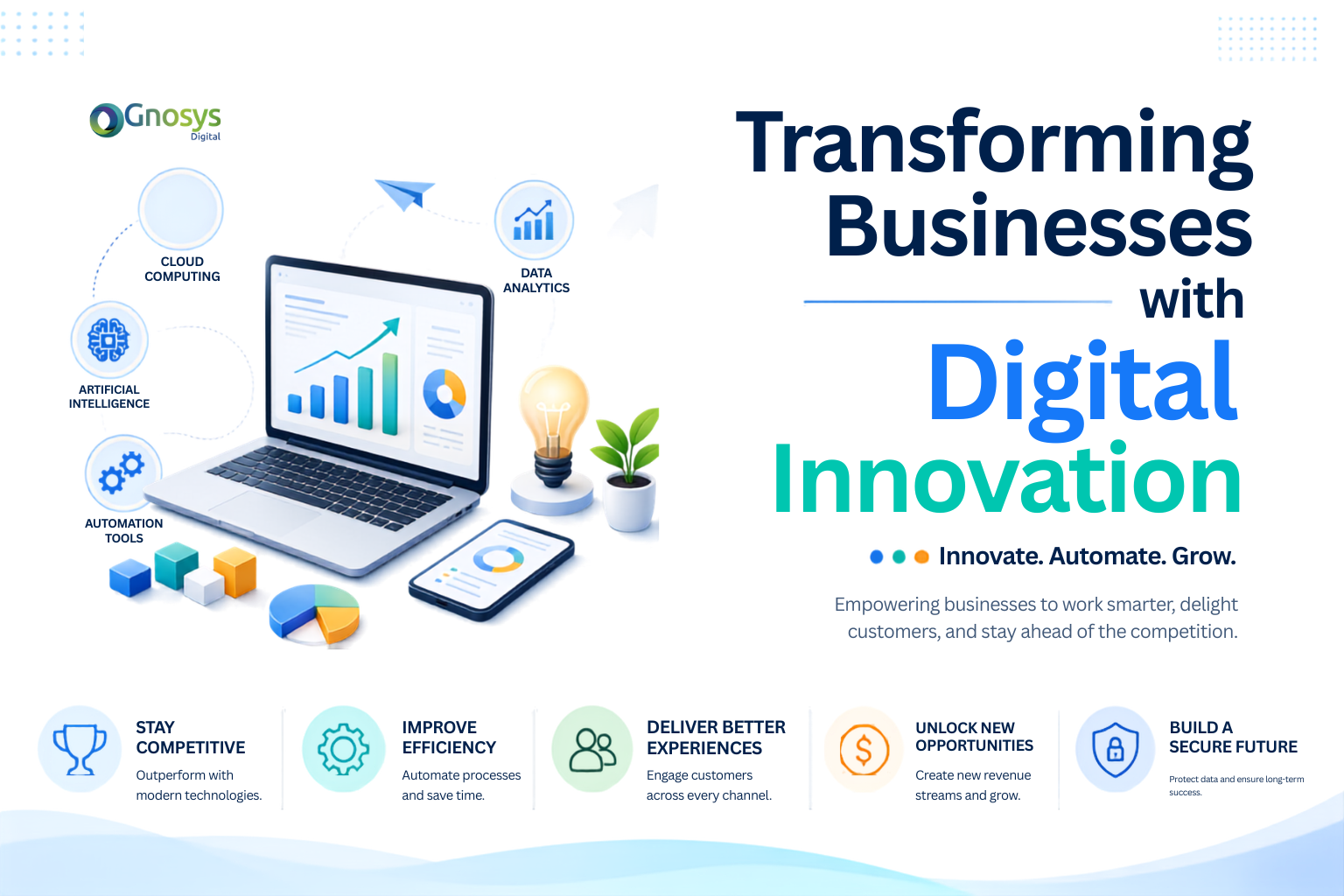
In today’s fast-paced digital world, businesses are constantly facing pressure to evolve and adapt to new technologies. What worked a few years ago is no longer sufficient, and organizations that fail to innovate risk losing their competitive edge in an increasingly crowded market. Digital disruption is not a future concept anymore it is happening right now.
Digital innovation plays a crucial role in helping businesses stay relevant and efficient. It involves adopting modern technologies such as artificial intelligence, automation, cloud computing, and data analytics to improve operations and customer experiences. However, it is not just about implementing tools; it is about rethinking how a business delivers value.
As competition continues to grow, digital innovation is becoming a necessity rather than an option. Companies that embrace it are able to scale faster, operate more efficiently, and respond quickly to market changes. This blog will guide you through the meaning, importance, technologies, and practical steps of digital innovation.
What is Digital Innovation?
Digital innovation refers to the use of modern digital technologies to improve business processes, enhance customer experiences, and drive growth. It focuses on finding smarter and more efficient ways to solve problems using digital tools.
It is important to understand the distinction between digitalization and digital transformation. Digitalization involves converting manual processes into digital formats, such as moving paperwork to software systems. On the other hand, digital transformation goes deeper by integrating technology into every aspect of a business to fundamentally change how it operates and delivers value.
In real-world scenarios, digital innovation can be seen in businesses creating websites, using automation tools, implementing AI-driven systems, and building mobile applications. These advancements help organizations become more efficient, scalable, and customer-focused.
Why Digital Innovation is Important for Businesses
Digital innovation is essential for businesses that want to grow and remain competitive in today’s environment. It enables organizations to adapt quickly, improve efficiency, and deliver better value to customers.
Key Benefits
- Staying Competitive: Businesses that adopt digital tools can keep up with industry trends and outperform competitors who rely on outdated methods.
- Improved Efficiency: Automation and streamlined workflows reduce manual effort, save time, and minimize errors.
- Better Customer Experience: Digital platforms allow personalized interactions and faster communication, increasing customer satisfaction.
- New Revenue Opportunities: Businesses can expand their reach, launch digital services, and create additional income streams.
Key Technologies Driving Digital Innovation

Several technologies are at the core of digital innovation, enabling businesses to operate more effectively and intelligently.
Core Technologies
- Artificial Intelligence (AI): Helps automate processes and enables smarter decision-making through data-driven insights.
- Cloud Computing: Provides scalability and flexibility, allowing businesses to grow without heavy infrastructure investment.
- Data Analytics: Transforms raw data into meaningful insights that support better strategic decisions.
- Automation Tools: Reduce repetitive tasks and improve operational efficiency across departments.
How Digital Innovation Transforms Businesses
Digital innovation significantly changes how businesses function and compete in the market. It enhances productivity, improves customer engagement, and enables faster decision-making through real-time data.
Organizations can streamline operations by automating repetitive tasks and simplifying workflows. This reduces operational delays and allows employees to focus on strategic activities. At the same time, businesses can engage customers through multiple digital channels, providing personalized and seamless experiences.
Another major advantage is cost reduction. By minimizing manual work and optimizing processes, companies can lower operational expenses while increasing output. Overall, digital innovation makes businesses more agile, efficient, and customer-centric.
Key Technologies Overview
| Technology | Function | Business Impact |
| Artificial Intelligence | Automates tasks and decision-making | Improves accuracy and personalization |
| Cloud Computing | Provides online infrastructure | Enables scalability and flexibility |
| Data Analytics | Analyzes business data | Supports better decision-making |
| Automation Tools | Handles repetitive processes | Saves time and reduces human error |
Steps to Implement Digital Innovation
Implementing digital innovation requires a structured and strategic approach. Businesses should begin by identifying their needs and understanding where technology can create the most impact.
The next step is selecting the right tools and technologies that align with business goals. It is equally important to train employees so they can effectively use these tools and adapt to new systems. Organizations should start with small implementations, test their effectiveness, and gradually scale successful strategies.
Continuous monitoring and optimization are essential to ensure long-term success. By analyzing performance and making improvements, businesses can maximize the benefits of digital innovation.
Common Challenges & Solutions
Adopting digital innovation is not without challenges, but these obstacles can be managed with the right approach. High initial costs can be addressed by starting small and scaling gradually. Lack of technical skills can be overcome through training and hiring experts.
Resistance to change is another common issue, which can be solved through clear communication and demonstrating the benefits of new systems. Data security concerns can be minimized by using secure platforms and implementing strong cybersecurity measures.
Future of Digital Innovation
The future of digital innovation is driven by rapid advancements in technology and evolving customer expectations. Artificial intelligence will continue to expand its role in automating processes and improving decision-making across industries.
Automation will become more widespread, helping businesses increase efficiency and reduce manual effort. Additionally, personalized customer experiences will become a key focus, with businesses using data and AI to deliver tailored services.
Companies that adopt these trends early will gain a significant competitive advantage and be better prepared for future challenges.
Conclusion
Digital innovation is transforming the way businesses operate, compete, and grow in today’s dynamic environment. It is no longer just about adopting technology but about creating smarter and more efficient systems that deliver value.
Businesses that leverage tools like AI, cloud computing, automation, and data analytics are better positioned to succeed in the long term. By starting small, continuously improving, and staying adaptable, organizations can unlock new opportunities and achieve sustainable growth.
Now is the time to embrace digital innovation and take the first step toward building a future-ready business.
Start Your E-commerce Journey
Ready to build a powerful online store? Get professional e-commerce development services and grow your business faster.
👉 https://gnosysdigital.com/product-category/digital-services/ecommerce-development/
