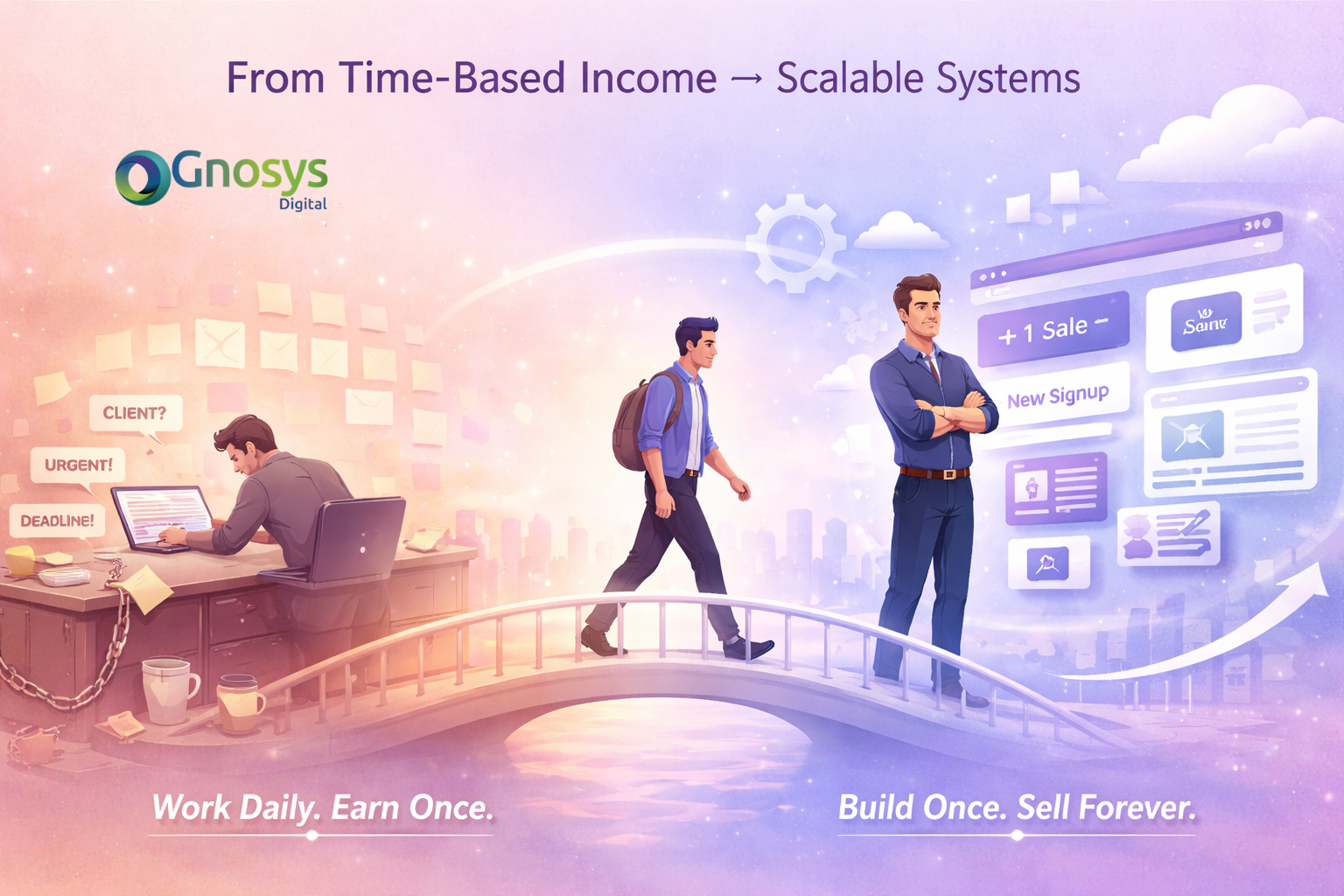
Are you trading time for money, constantly working harder just to earn more? Or are you building something that continues to generate income even while you sleep? This is a question many professionals, freelancers, and business owners face today in the fast-moving digital world.
In today’s economy, the shift from traditional income models to scalable digital income is becoming more important than ever. Digital products and digital services have opened new opportunities where effort can be multiplied instead of repeated. Instead of working hour by hour, you can create systems that work for you.
In this blog, you will learn the clear difference between digital products and digital services, how they work, and how you can use both strategically to build a smarter, more scalable income model for your business or personal brand.
What are Digital Products?
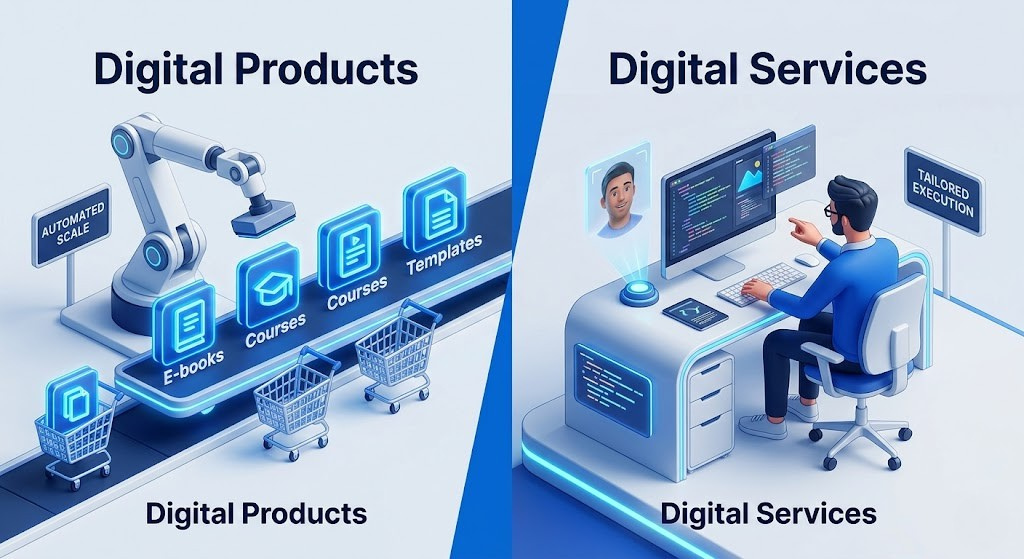
Digital products are non-physical assets that can be created once and delivered online without any need for inventory or shipping. These products exist in a downloadable or cloud-based format, making them easily accessible to customers anytime and anywhere. Because they are intangible, businesses can distribute them globally with minimal additional cost.
Some common examples of digital products include E-books, online courses, ready-made templates, and software solutions such as ERP systems. These products are designed to solve specific problems, provide knowledge, or improve business processes, making them highly valuable in today’s digital-first environment. From a simple checklist to a full-scale software platform, digital products come in many scalable forms.
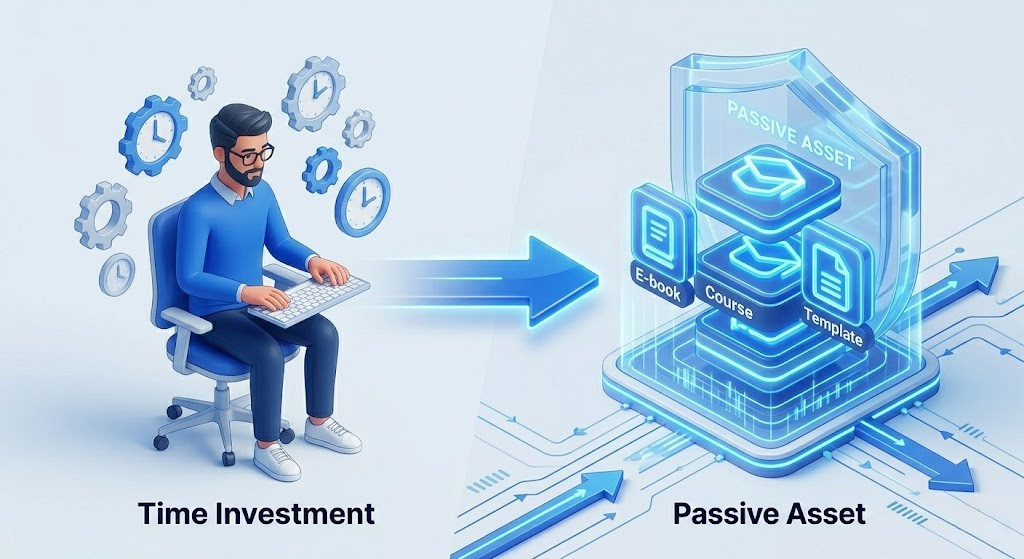
One of the biggest advantages of digital products is their ability to generate income without continuous effort after creation. Key features include:
- One-time creation with long-term usability
- Unlimited selling potential without extra production cost
- Ability to generate passive income over time
What are Digital Services?
Digital services are skill-based offerings delivered online to help businesses solve specific problems or achieve defined goals. Unlike digital products, these services rely on expertise, experience, and direct execution, making them more personalized and result-driven. They are typically delivered through communication tools, project platforms, or cloud-based systems.
Common examples of digital services include web development, ERP implementation, social media management, and IT consulting. Each service is tailored according to the client’s needs, ensuring that businesses receive solutions that align with their operations and objectives. This flexibility makes digital services highly valuable for companies looking for customized support.
One of the defining aspects of digital services is their dependency on time and interaction. Key features include time-based work where income is often linked to hours or project scope, customized solutions designed for individual clients, and a high level of client interaction to ensure successful delivery and satisfaction.
Digital Products vs Digital Services
Understanding the difference between digital products and digital services is essential for choosing the right business model. While both operate in the digital space, they differ significantly in how value is created, delivered, and scaled over time. One focuses on automation and repeatability, while the other emphasizes personalization and direct involvement.
Digital products are designed to be created once and sold multiple times, making them ideal for scalable income generation. On the other hand, digital services require ongoing effort, where each project or client demands time, attention, and customization. This makes services more relationship-driven but less scalable compared to products.
The table below highlights the key differences between the two models:
| Factor | Digital Products | Digital Services |
| Effort | High upfront | Continuous |
| Income | Passive | Active |
| Scalability | High | Limited |
| Customization | Low | High |
Pros & Cons
When deciding between digital products and digital services, it’s important to evaluate both advantages and limitations. Each model offers unique benefits depending on your goals, resources, and long-term vision. While one focuses on scalability, the other emphasizes immediate results and flexibility.
Digital products are highly scalable and can generate income over time with minimal ongoing effort. However, they require strong initial planning, creation time, and effective marketing to succeed. On the other hand, digital services are easier to start and can bring quick income, especially if you already have in-demand skills, but they often depend heavily on your time and availability.
Overall, the choice depends on whether you want to build a long-term passive income system or generate consistent short-term earnings through active work. Balancing both can often be the most effective strategy for sustainable growth.
Which One Should You Choose?
Choosing between digital products and digital services depends on your current skills, experience, and business goals. If you are just starting out, digital services are often the best option because they require minimal upfront investment and allow you to start earning quickly by using your existing skills. As you gain experience and understand market needs, you can gradually move toward building digital products.
For experienced professionals, digital products offer a powerful way to scale income without increasing workload. Instead of trading time for money, you create systems that generate revenue repeatedly. Businesses, however, benefit the most by combining both approaches using services to generate revenue and insights, while building products for long-term scalability.
The most effective strategy is the hybrid model: start by offering services, understand client problems deeply, and then convert those solutions into digital products. For example, if you repeatedly provide the same service, you can turn it into a template, course, or software solution. This way, you not only earn actively through services but also build passive income streams over time.
How to Combine Both (Best Strategy)
Building a successful digital business doesn’t require choosing only one path. The smartest approach is to combine digital services and digital products in a structured way that allows you to grow from active income to scalable income. This strategy helps you reduce risk while steadily building long-term assets.
Start by offering services to gain real-world experience and understand your audience deeply. As you work with multiple clients, you’ll begin to notice common challenges and repeated requirements. These patterns are valuable because they highlight opportunities where a single solution can serve many people.
Follow this proven step-by-step approach to combine both models effectively:
Step 1: Offer services to gain hands-on experience
Step 2: Identify repeat problems faced by clients
Step 3: Create a digital product (course, tool, or template)
Step 4: Scale your product using automation and systems
Future of Digital Business
The future of digital business is rapidly evolving with advancements in technology and changing customer expectations. Businesses are no longer just selling products or services they are building ecosystems powered by automation, data, and smart systems. This shift is creating more opportunities for scalable and sustainable growth.
Artificial Intelligence and automation are playing a major role in reducing manual work and improving efficiency. From automated customer support to smart recommendations, businesses can now operate faster and more intelligently. Alongside this, subscription-based models are becoming more popular, allowing companies to generate recurring revenue instead of one-time sales.
Another major trend is the growth of SaaS and ERP solutions, which help businesses manage operations seamlessly in one place. These systems are becoming essential for companies that want better control, scalability, and data-driven decision-making in a competitive digital landscape.
Conclusion
Digital products and digital services both offer powerful opportunities, but the real success lies in using them strategically. Services help you start, learn, and earn quickly, while products help you scale and grow without limits. When combined, they create a strong and sustainable business model.
Don’t just work for money build systems that work for you. The shift from active income to scalable income is what separates short-term effort from long-term success. By taking the right steps today, you can create a future where your income is not limited by your time.
Now is the time to take action. Start a service, build a product, and scale smartly to create a digital business that grows with you.
Schedule a Consultation:
Digital Service : https://gnosysdigital.com/product-category/digital-services/
Digital Product : https://gnosysdigital.com/product-category/digital-products/
