
In today’s business world, most customers search online before they buy anything. Whether they need a service, compare prices, or check reviews, their journey usually starts on Google or social media. If your business does not appear there, many potential customers may never know you exist.
Yet many SMEs still depend only on referrals, walk-ins, or traditional offline marketing methods. While these channels can still work, they are no longer enough to support consistent growth in a competitive market. Businesses that rely only on offline visibility often miss opportunities every single day.
This is why a website has become more than just an online presence. In 2026, a professional website acts as a growth engine that helps attract customers, build trust, and generate leads around the clock.
Why SMEs Need to Think Digital in 2026
Buyer behavior has changed significantly over the last few years. Customers now prefer to research businesses online before making contact or purchasing. They want quick access to information, reviews, pricing, and proof that your business is genuine and reliable.
Before choosing a vendor or service provider, customers often compare multiple businesses online. If competitors have websites and you do not, they automatically gain an advantage. Even if your service is better, a weak digital presence can cost you valuable opportunities.
Trust now begins with what people see online. A clean website with clear information instantly creates confidence, while no website can create doubt in the customer’s mind.
Common Problems SMEs Face Without a Website
Businesses without a website often lose leads to competitors who are easier to find online. When customers search for products or services and cannot find your business, they usually move to the next available option. In many cases, that means losing sales before the conversation even begins.
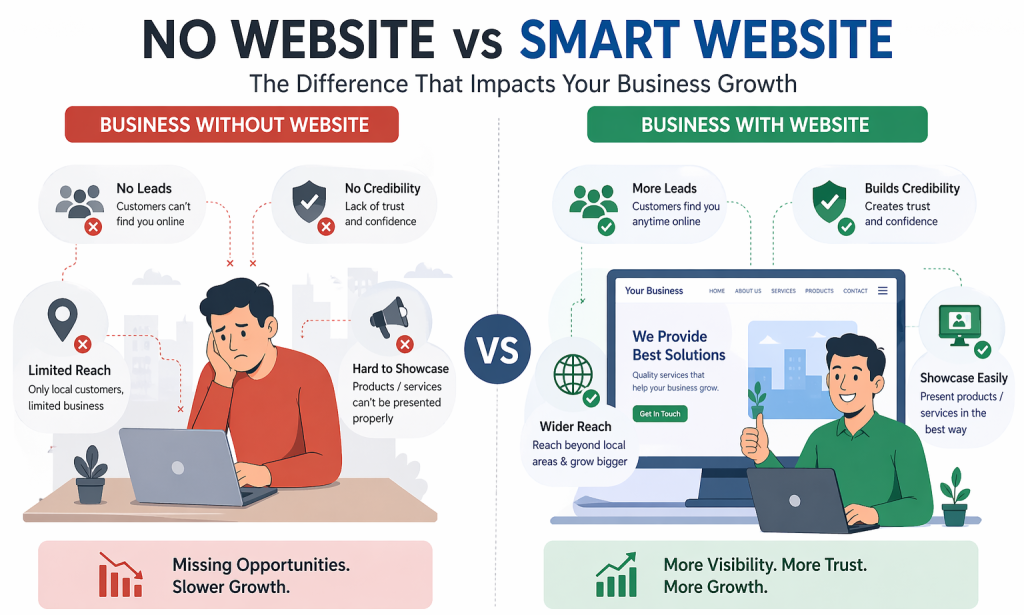
Another challenge is the lack of credibility online. Customers expect modern businesses to have at least a professional website with contact details, services, and business information. Without it, some people may question the legitimacy or scale of the business.
Limited reach is also a major issue. Depending only on offline channels restricts growth to a local audience and makes it difficult to showcase products or services properly to a wider market.
How a Website Helps SMEs Grow Faster
A website works for your business 24/7, even when your office or store is closed. Customers can visit anytime, explore your services, and contact you without waiting for business hours. This creates opportunities even while you sleep.
Websites also generate leads consistently through contact forms, calls, and messaging integrations. Instead of relying only on referrals, you create a direct channel for new inquiries every day. Over time, this can become a strong source of growth.
Most importantly, a professional website builds your brand image and helps you expand beyond your city or local market. It allows customers from different locations to discover and trust your business.
Key Features Every SME Website Should Have
A good website should not only look attractive but also perform well for users and search engines. It needs to be fast, mobile-friendly, and easy to navigate so customers can quickly find what they need. Since many users browse on phones, mobile experience is especially important.
The website should also include strong lead-generation features such as contact forms, WhatsApp integration, and clear call-to-action buttons. These tools make it easier for visitors to reach out and convert into real business inquiries.
Essential features include:
- Mobile-friendly responsive design
- Fast loading speed
- Contact form and WhatsApp integration
- Product or service pages
- Testimonials and trust signals
- SEO-ready structure
Real Business Benefits of Having a Website
The most immediate benefit of a website is increased inquiries and leads. When people can easily discover your business online and contact you instantly, opportunities naturally increase. This creates a steady pipeline of potential customers.
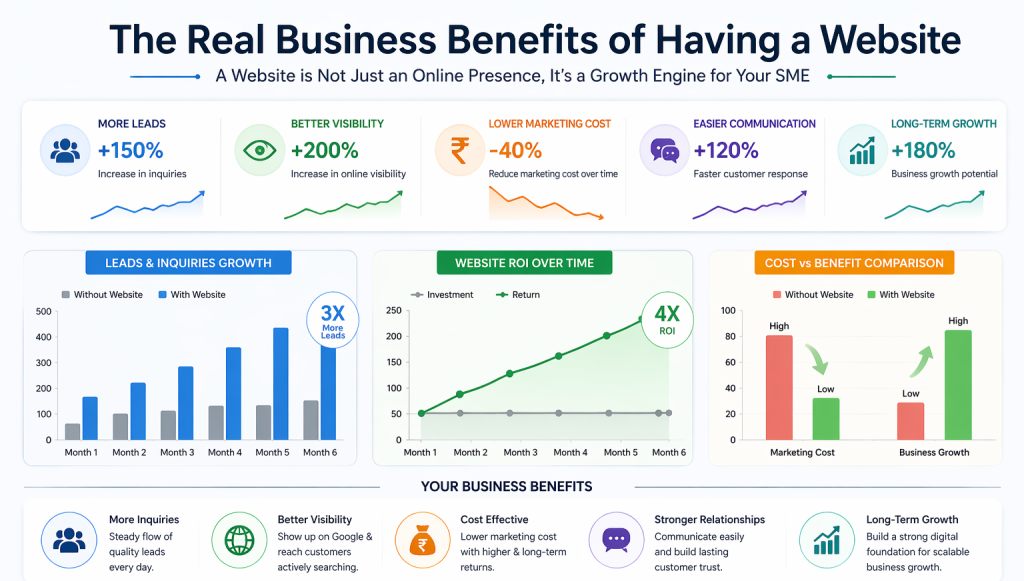
A website also improves brand visibility over time. As more people find your business through search engines and digital marketing, your name becomes more recognized in the market. This visibility compounds and creates long-term advantages.
| Benefit | Business Impact | Long-Term Value |
| More Leads | Increased inquiries | Higher sales opportunities |
| Brand Visibility | Better recognition | Stronger market position |
| Lower Marketing Cost | Organic traffic growth | Better ROI over time |
| Easier Communication | Faster customer response | Better customer experience |
Why 2026 Is the Right Time to Build One
Businesses across industries are rapidly moving online, and competitors are investing in websites, SEO, and digital marketing. If your business delays going digital, the gap between you and the market leaders becomes wider every year.
Customers now expect convenience, quick information, and simple ways to connect. A website meets these expectations while giving your business a modern and professional image. Without it, customer trust can weaken before contact even begins.
AI tools, advertising platforms, and digital marketing campaigns also perform better when linked to a website. Delaying the decision means losing valuable growth opportunities that are available right now.
Conclusion
In 2026, a website is no longer optional for SMEs that want to grow consistently. It helps businesses attract attention, build trust, and convert visitors into paying customers through a professional digital presence.
A well-designed website becomes one of the strongest assets for long-term growth. It supports marketing, improves customer communication, and creates opportunities beyond your local market.
If you want to grow faster and stay competitive, now is the time to act. Build a smart business website in 2026 and unlock new opportunities for your SME. 🚀
