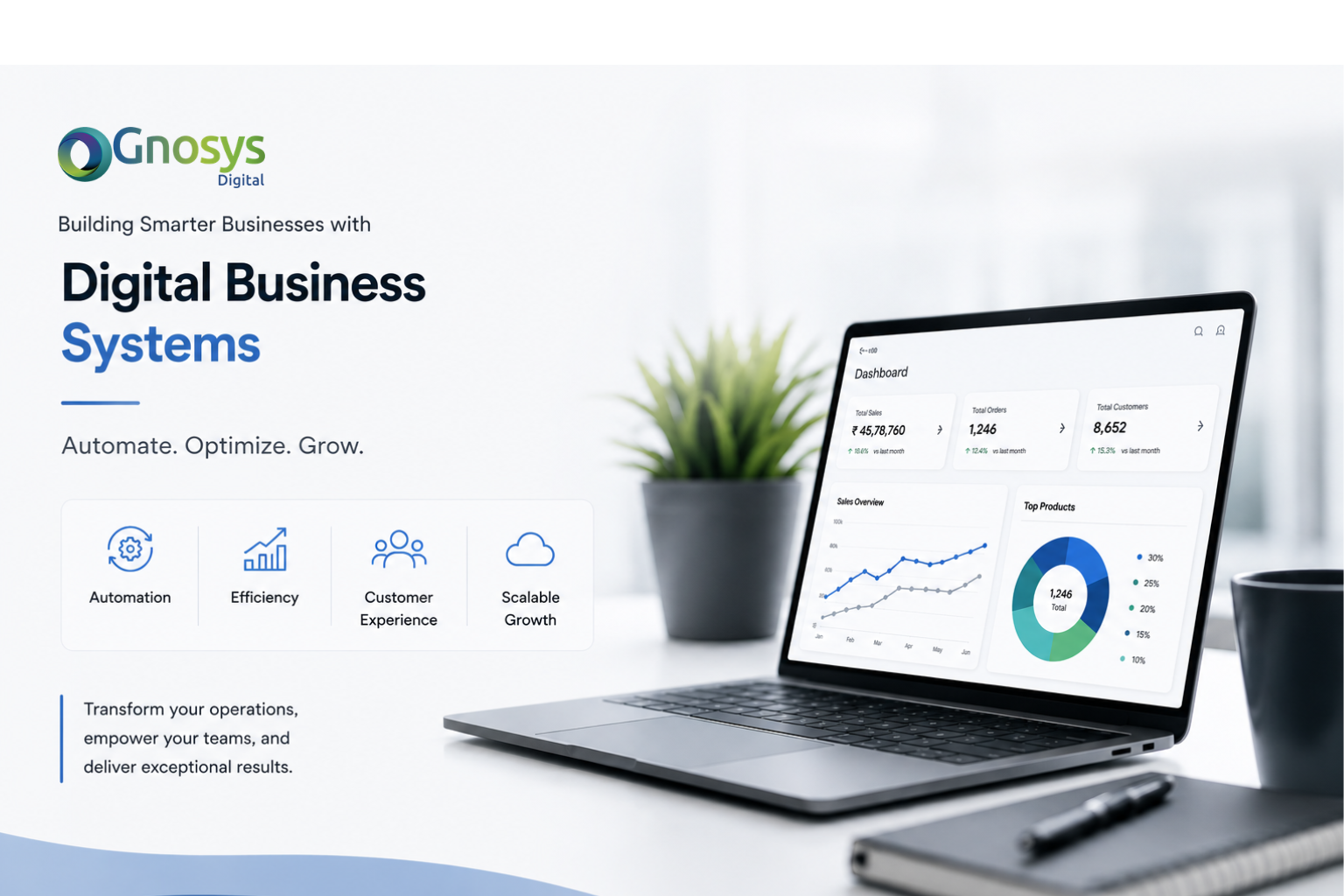
Businesses today are struggling with disconnected systems where sales, operations, and customer management are handled separately without any unified digital structure. This creates delays, miscommunication, and inefficiencies that directly impact revenue growth and customer satisfaction. Many organizations still rely on outdated manual processes that slow down decision-making and reduce overall productivity.
At the same time, industries across the world are rapidly shifting toward automation and integrated digital ecosystems where every process is connected through smart systems. This transformation is not limited to large enterprises anymore, as even small and medium businesses are adopting ERP, CRM, and workflow automation tools. The digital shift is becoming a necessity rather than an option in competitive markets.
Understanding this change is crucial for every business owner who wants to stay relevant in the modern economy. Without adapting to digital systems, businesses risk falling behind competitors who are already leveraging automation for faster growth and better efficiency. This blog will help you understand why digital transformation is no longer optional.
What Digital Business System Means
A digital business system refers to an integrated framework where all business operations such as sales, inventory, customer management, and reporting are managed through software-based solutions. Instead of using separate tools or manual records, everything is centralized into one connected system that improves accuracy and efficiency. This ensures that decision-making becomes faster and more reliable.
These systems often include ERP (Enterprise Resource Planning), CRM (Customer Relationship Management), and automation workflows that streamline repetitive tasks. ERP helps manage internal operations, CRM focuses on customer interactions, and automation reduces manual workload by handling routine processes. Together, they create a seamless digital environment for business growth.
Such systems are applicable across industries including retail, manufacturing, healthcare, education, and services. Whether it is tracking inventory or managing customer data, digital systems provide flexibility and scalability. This makes them suitable for both small startups and large enterprises aiming for structured growth.
Competitive Advantage of Automation
Automation provides businesses with a significant competitive edge by reducing human effort and increasing operational speed. When processes are automated, businesses can handle larger workloads without increasing staff or operational costs. This allows companies to focus more on strategy and growth rather than repetitive tasks.
Speed and efficiency become the core benefits of automation, enabling businesses to respond quickly to customer demands and market changes. Automated workflows eliminate delays caused by manual processing and improve overall service delivery. This results in higher customer satisfaction and stronger market positioning.
Key Advantages of Automation
- Faster operations
- Lower cost structure
- Better customer handling
- Real-time decisions
- Scalable growth
Problems in Manual Business Systems
Manual business systems often suffer from inefficiencies that slow down daily operations and create unnecessary workload for employees. Tasks such as data entry, reporting, and customer handling become time-consuming and prone to human error. This leads to reduced productivity and increased operational stress.
Another major issue is data loss and delays caused by paper-based or unstructured digital records. Important business information may get misplaced or updated incorrectly, resulting in poor decision-making. These inconsistencies directly affect business reliability and performance.
Over time, manual systems limit business growth because they cannot scale effectively with increasing demand. As operations expand, the lack of automation creates bottlenecks that restrict efficiency and profitability. This makes it difficult for businesses to compete in a fast-moving digital environment.
Manual vs Automated Systems
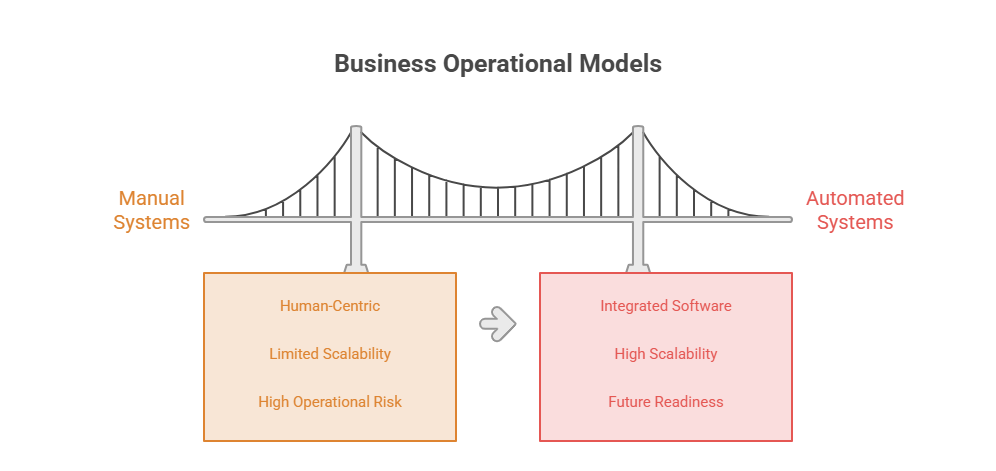
Manual systems rely heavily on human effort, paper records, and disconnected tools, whereas automated systems use integrated software platforms to manage everything in a centralized and efficient manner. This fundamental difference impacts speed, accuracy, and scalability of business operations. Understanding this contrast helps businesses identify the need for transformation.
From a business perspective, automation is not just a technological upgrade but a strategic necessity for long-term growth. Companies using automated systems can make faster decisions, reduce operational costs, and improve customer satisfaction. On the other hand, manual systems often struggle to maintain consistency and efficiency as the business grows.
The transition from manual to automated systems is essential for staying competitive in today’s digital-first economy. Businesses that delay this shift often face higher operational risks and reduced market relevance. Moving toward automation ensures sustainability and future readiness.
| Feature | Manual System | Automated System |
| Speed | Slow and time-consuming | Fast and real-time |
| Accuracy | High risk of human error | High accuracy |
| Cost Efficiency | Higher long-term cost | Optimized cost structure |
| Scalability | Limited growth | Highly scalable |
| Data Management | Fragmented records | Centralized system |
Customer Experience Improvement
Customer expectations have evolved significantly in the digital era, where people demand faster responses, personalized services, and seamless interactions. Businesses that fail to meet these expectations often lose customers to more advanced competitors. This shift has made customer experience a critical factor in business success.
Automation plays a key role in enhancing customer service by enabling faster communication, reducing waiting time, and improving service accuracy. With digital systems, businesses can track customer behavior and provide more relevant solutions instantly. This leads to stronger customer relationships and improved loyalty.
Customer Experience Benefits
- Instant response system
- 24/7 availability
- Personalized experience
- Faster support resolution
- Better engagement
Why Businesses Delay Automation
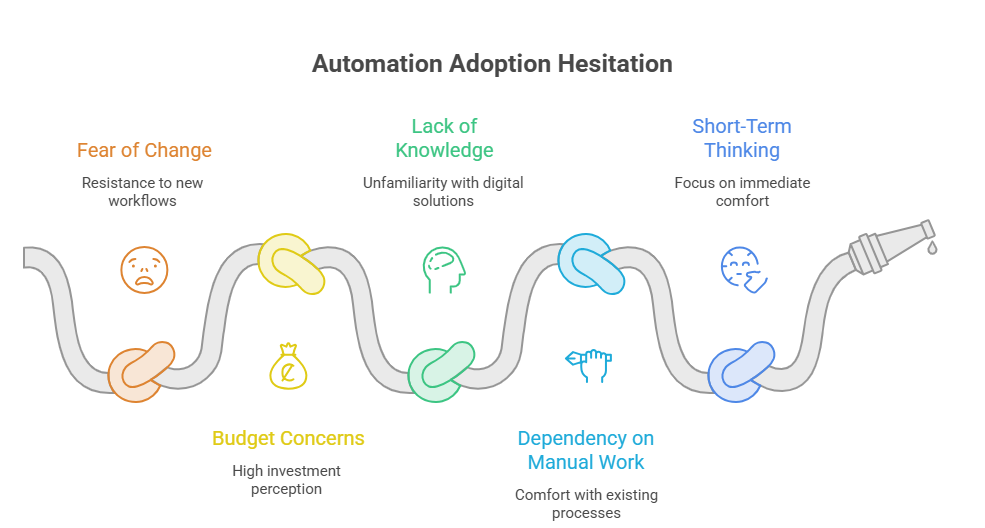
Many businesses hesitate to adopt automation due to psychological resistance and fear of changing established workflows. Business owners often feel comfortable with existing manual processes and avoid disruption, even when it limits growth potential. This mindset becomes a major barrier to digital transformation.
Cost concerns and lack of understanding also contribute to delayed adoption of automation systems. Some businesses believe that implementing digital solutions requires high investment and complex training, which discourages them from taking action. However, these assumptions often lead to greater long-term losses.
Reasons for Delay
- Fear of change
- Budget concerns
- Lack of knowledge
- Dependency on manual work
- Short-term thinking
Future of Digital Business Systems
The future of business operations is moving toward fully integrated digital ecosystems where all functions are connected through intelligent platforms. This includes AI-driven insights, real-time analytics, and automated decision-making systems that reduce human dependency. Businesses adopting these technologies will gain a strong competitive advantage.
Unified systems are becoming the standard where organizations operate on a single platform instead of multiple disconnected tools. This evolution allows seamless data flow between departments, improving efficiency and coordination. Cloud-based infrastructure further enhances accessibility and scalability.
Future Trends
- One platform systems
- AI-driven decisions
- Cloud integration
- Full automation workflows
- Scalable architecture
Conclusion
Digital transformation is no longer an optional upgrade but a fundamental requirement for business survival and growth. Organizations that continue using manual systems will increasingly face inefficiencies, while automated businesses will continue to scale faster and operate more efficiently. The gap between traditional and digital businesses is widening rapidly.
The urgency to adopt automation is higher than ever, as market competition, customer expectations, and operational complexity continue to increase. Businesses that delay this transition risk losing both revenue and market relevance. Embracing digital systems ensures long-term stability and strategic advantage.
In conclusion, the future belongs to businesses that adapt, integrate, and automate their operations effectively. Digital systems are not just tools but complete growth enablers that redefine how modern businesses function and compete in global markets.
👉 Explore More:
