
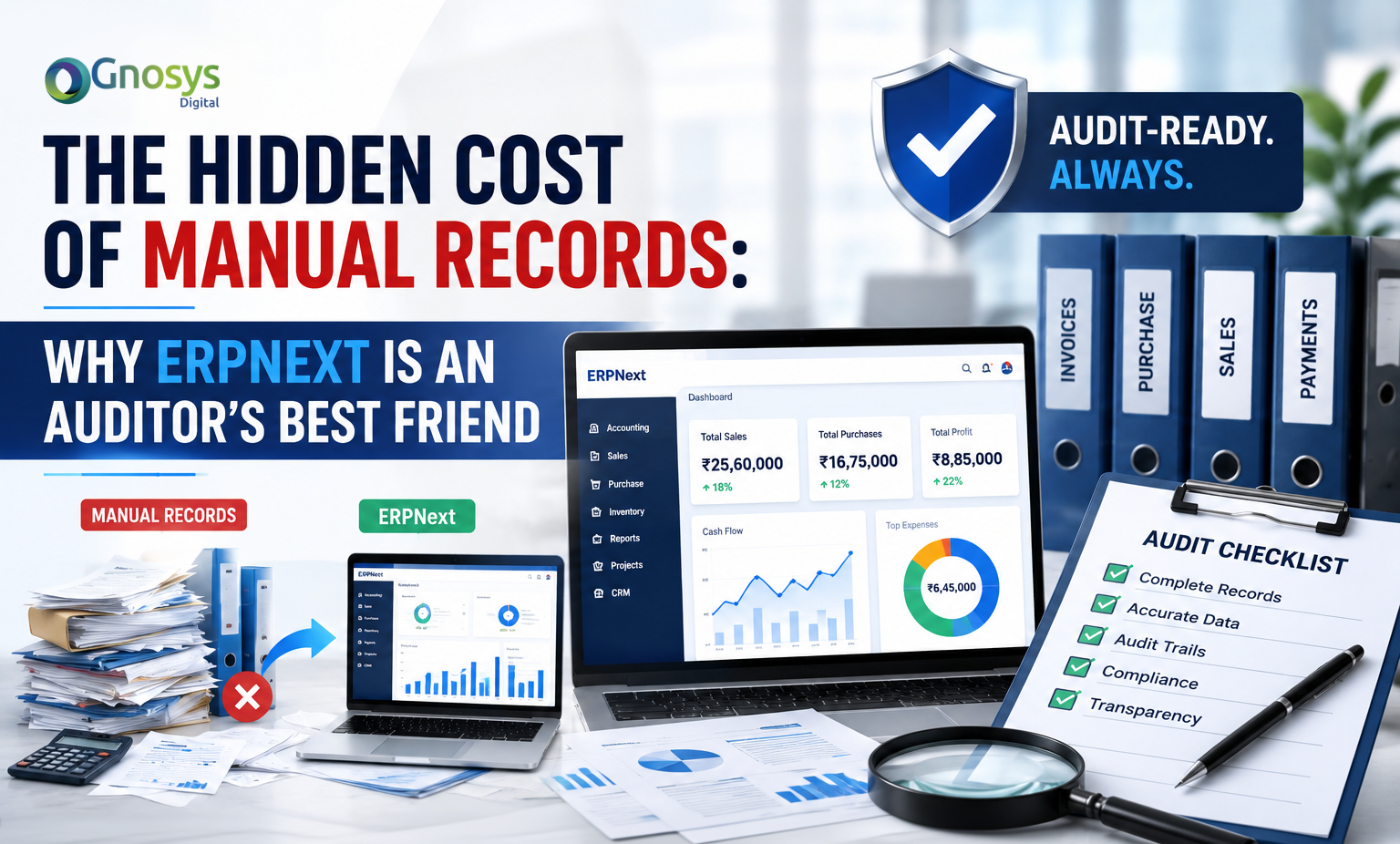
Every business owner has experienced that moment of panic before an audit. Teams start searching through folders, emails, spreadsheets, and filing cabinets trying to locate invoices, purchase records, and supporting documents. What should be a straightforward process often turns into a stressful race against time.
Manual record-keeping creates confusion that builds up over months or even years. Missing records, duplicate entries, outdated spreadsheets, and inconsistent data make it difficult to provide accurate information when auditors request it. These problems not only increase workload but also create unnecessary business risks.
The real cost of manual record management goes far beyond wasted time. It affects compliance, decision-making, operational efficiency, and business credibility. This is where ERPNext helps organizations become audit-ready by keeping records organized, accurate, and accessible at all times.
The Hidden Costs of Manual Record Management
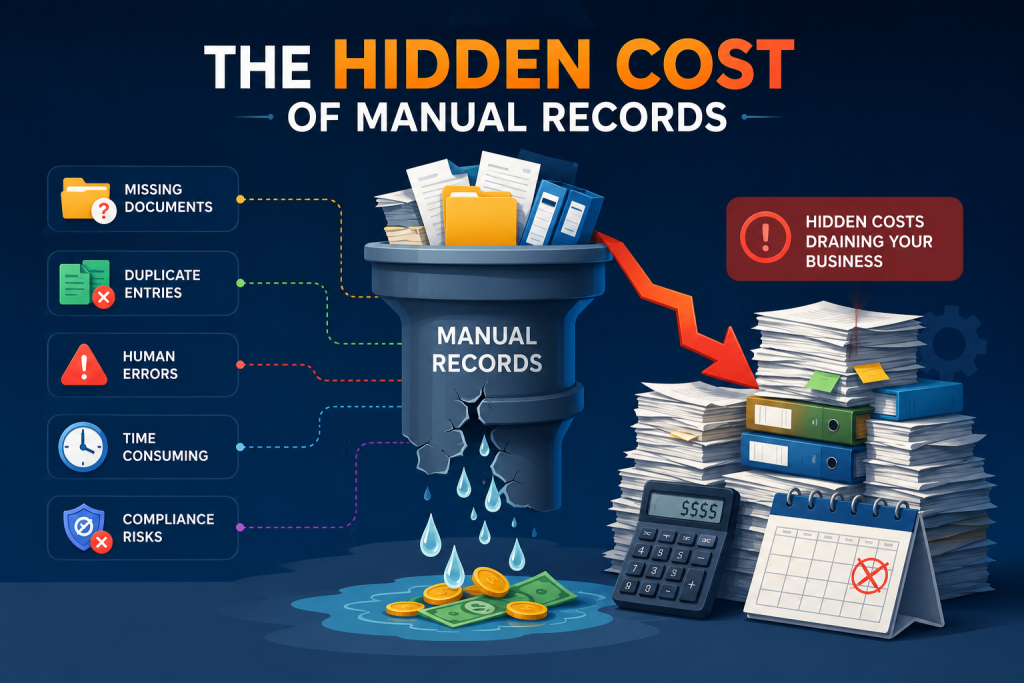
Many businesses continue to rely on spreadsheets and manual processes because they appear affordable on the surface. However, the hidden costs become apparent when errors start affecting operations and compliance. Human mistakes in data entry can create inconsistencies that spread across multiple departments and reports.
Lost or misplaced documents are another common issue. When records are stored in different systems, emails, or physical files, finding the right information becomes difficult. Duplicate data entry further increases the chances of inaccuracies while consuming valuable employee time.
What seems like a low-cost approach today often becomes extremely expensive during audits. Delays, corrections, compliance issues, and lost productivity can significantly increase operational costs and create unnecessary stress across the organization.
Common Audit Challenges Businesses Face
Audit preparation becomes difficult when businesses lack organized records and transaction history. Auditors often request documents that companies struggle to locate because information is scattered across multiple systems and departments.
Common audit challenges include:
- Missing invoices and purchase records
- Incomplete customer and vendor information
- Lack of approval trails and accountability
- Difficulty tracking historical transactions
- Compliance and reporting delays
- Inconsistent financial records
These challenges not only slow down audits but can also impact business credibility, compliance status, and stakeholder confidence.
Why Traditional Spreadsheets Are No Longer Enough
Spreadsheets were once a practical solution for managing business records, but modern business operations demand much more. As companies grow, the volume of transactions, documents, and compliance requirements increases significantly.
One major limitation is the lack of a centralized data source. Different departments often maintain separate files, creating silos that make collaboration difficult and increase the risk of inconsistencies. Version management also becomes a challenge when multiple people work on the same records.
Additionally, spreadsheets offer limited security controls and provide little visibility into who made changes or when they were made. Without proper audit trails, businesses struggle to maintain transparency and accountability.
How ERPNext Makes Businesses Audit-Ready
ERPNext helps businesses create a centralized environment where all records, transactions, and documents are stored in one secure system. Instead of searching across multiple tools and files, teams can quickly access the information they need whenever required.
Every transaction is automatically tracked, creating a complete record of business activities. Documents can be attached directly to transactions, ensuring supporting information remains linked and easily accessible. This reduces confusion and improves record accuracy.
User activity logs, approval workflows, and role-based access controls further strengthen accountability. Every business action becomes traceable, verifiable, and easier to review during audits.
Key ERPNext Features That Auditors Love
Auditors value systems that provide transparency, consistency, and easy access to records. ERPNext offers several features specifically designed to simplify audits and improve compliance management.
Financial reporting tools provide accurate and up-to-date records, while document attachments ensure supporting evidence is readily available. Purchase, sales, and inventory activities are tracked automatically, creating a clear audit trail across operations.
Features such as user permissions, approval workflows, compliance reports, and record history provide complete visibility into business processes and help maintain strong governance standards.
Beyond Audits: Performance Benefits of ERPNext
While audit readiness is a major advantage, ERPNext delivers benefits that improve daily business operations as well. Organizations gain access to real-time information, allowing management teams to make faster and more informed decisions.
The platform improves operational efficiency by reducing manual work, eliminating duplicate processes, and streamlining communication across departments. Better reporting and forecasting capabilities also help businesses plan more effectively and respond quickly to changing conditions.
| Benefit | Business Impact | Long-Term Value |
| Faster Decision-Making | Real-time visibility | Improved business agility |
| Operational Efficiency | Reduced manual work | Higher productivity |
| Better Forecasting | Accurate reporting | Smarter planning |
| Administrative Reduction | Automated processes | Lower operational costs |
| Business Transparency | Complete audit trails | Greater accountability |
ERPNext doesn’t just help during audits it creates a stronger, more efficient organization every day.
Conclusion
Audits should not be stressful, disruptive, or time-consuming. Businesses that maintain organized, real-time records can handle compliance requirements with greater confidence and significantly less effort.
ERPNext helps companies move beyond reactive record management and establish proactive control over their operations. By centralizing information, automating tracking, and maintaining complete audit trails, it creates a solid foundation for compliance and business growth.
If your business wants to eliminate audit stress and improve operational efficiency, now is the time to act. Start building an audit-ready business with ERPNext before your next audit arrives and experience the benefits of complete visibility, accountability, and control.
👉 Start building an audit-ready business with ERPNext before your next audit arrives
https://gnosysdigital.com/erpnext-implementation/
